The transition from the digital hum of modern life to the silent, sun-bleached stones of the Giza Plateau represents more than a change in geography; it is a profound recalibration of the human clock. Standing before structures that have anchored the horizon for four millennia, the traveler is forced to confront a scale of existence that dwarfs the frantic pace of the contemporary world. It is an experience that replaces the fleeting satisfaction of a standard holiday with a heavy, resonant sense of continuity that lingers in the mind long after the return flight.
Selecting the right Egypt vacation packages ensures that your encounter with these ancient monoliths is as seamless as it is transformative. As you move from the chaotic energy of Cairo to the rhythmic stillness of the Upper Nile, the experience of your Egypt vacation becomes a curated study in human ambition and endurance. This journey is not merely a tour of archaeological sites, but a confrontation with the very foundations of organized society and spiritual thought. Historical travel provides a unique mental architecture, allowing us to hang our personal memories upon the sturdy hooks of a civilization that refused to be forgotten.
The structural beauty of an Egyptian odyssey relies on the slow reveal of its diverse historical layers, from the Greco-Roman temples of the south to the Islamic grandeur of the capital. Many travelers find that coordinating their journey through a specialist like Travelodeal provides the necessary logistical ease to focus entirely on the weight of the past. The goal is to arrive at the Valley of the Kings just as the morning light hits the limestone cliffs, revealing the hidden entrances to a world of subterranean art and silent royalty. Egypt vacation packages offer the most enduring memories when they balance the grand spectacle of the Pyramids with the intimate, dust-moted quiet of a Coptic church or a medieval caravanserai.
The Scale of Ambition: Why Giants Matter
Historical destinations like Egypt dominate our memories because they challenge our understanding of what is physically possible. The Great Pyramid is not just a tomb; it is a mathematical and engineering marvel that remained the tallest man-made structure on earth for over 3,800 years. Standing at its base, the mind struggles to process the collective effort of thousands of hands moving millions of stone blocks. This cognitive dissonance creates a “flashbulb memory” a vivid, lasting mental image born from a sense of sheer awe.
Unlike modern skyscrapers that feel temporary and replaceable, the monuments of Egypt feel inevitable. They were built for eternity, and that intentionality transfers to the traveler, making the visit feel like a momentous event rather than a casual excursion.
The Narrative of Continuity: Walking Through Time
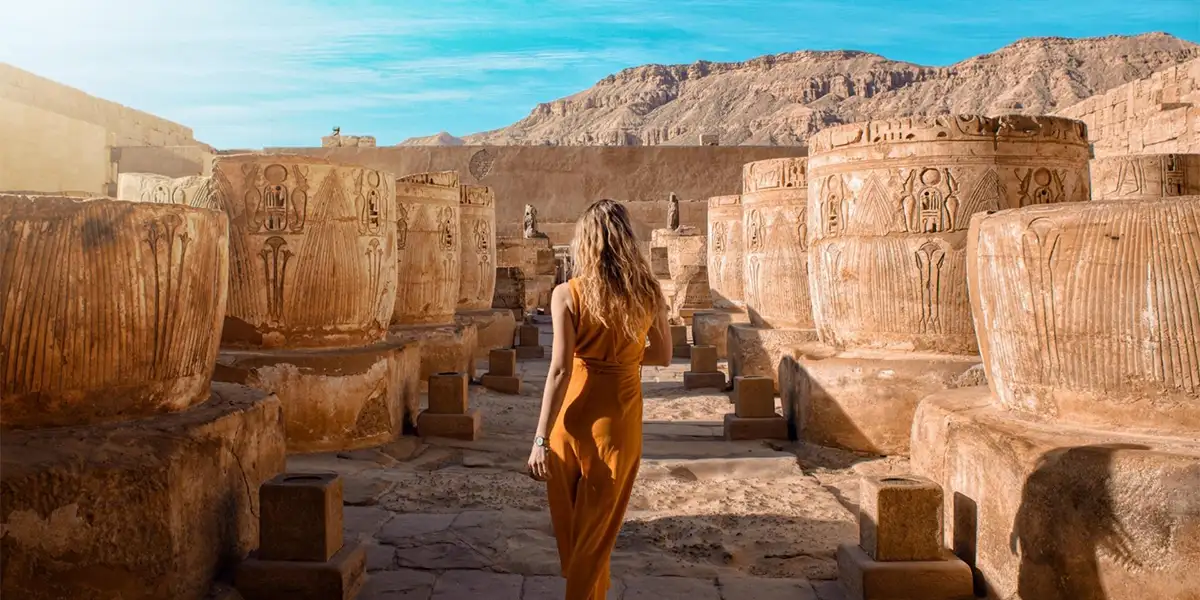
One of the reasons historical travel leaves a deeper imprint is the narrative thread it provides. In Luxor, the Karnak Temple Complex isn’t a single building but a 1,500-year conversation between successive Pharaohs, each adding their own columns and obelisks to the story. Walking through the Great Hypostyle Hall, you are moving through centuries of political and religious evolution.
This sense of continuity helps us place our own lives within a broader context. We see that the anxieties, triumphs, and spiritual quests of the ancients are remarkably similar to our own. This emotional connection to the people of the past transforms a “sight” into a “story,” and stories are much harder to forget than mere images.
Sensory Anchors: Beyond the Visual
The deepest travel memories are those that engage all the senses, and Egypt is a sensory masterpiece. It is the smell of incense and old paper in the Egyptian Museum, the taste of strong hibiscus tea on a slow-moving felucca, and the tactile warmth of sun-baked sandstone under your palm. These sensory anchors tie the historical facts to physical feelings, embedding the experience into your long-term memory.
The contrast between the arid, golden desert and the lush, emerald ribbon of the Nile creates a visual drama that the brain prioritizes. This “edge” between life and nothingness is where the ancient Egyptians found their gods, and it is where the modern traveler finds a sense of profound perspective.
An Architecture of the Mind
Ultimately, we remember historical destinations because they demand something of us. They require us to imagine, to learn, and to respect the efforts of those who came before. Egypt does not just show you its past; it invites you to inhabit its timeline. By engaging with a civilization that viewed life as a prelude to eternity, you gain a sense of peace and a clearer view of the present. It is a journey that leaves you with a mental landscape as vast and enduring as the Sahara itself, reminding us that while we are small, we are part of a story that is infinitely large.